January 23, 2009
With high gas prices, one of the questions many riders are asking is if they have to sue premium fuel. To answer that, we have to take into consideration the exact sled and engine set-up. If you’re running any form of higher compression, then chances are you need the slower flame front speed afforded by the premium fuel. But, this depends on the elevation. Generally, as the elevation is lower, as the compression is higher and as the ignition timing is advanced then your octane requirements are increased.
Using premium fuel in a sled that doesn’t have advanced timing or higher compression actually will take power away from your package. Arctic Cat has been telling their F-series riders for the past few years that the stock set-up is designed to work with 87-octane fuel, and that the sleds are faster on it.
First you know if your sled has a knock sensor. If it does, then it can likely compensate for the various fuel types and adjust the ignition timing accordingly. Most of the newer generation of CFI and SDI engines will have this, so they will run at full power on premium, but will roll back the timing slightly if a lesser octane fuel is detected. Many older Polaris models have a key switch that can be set manually to premium or regular, so you can run whatever you want in them. The Arctic Cat four-strokes make more power on premium, but can sense and adjust the timing for 87-octane fuel as well. All of the Yamaha four-strokes, with the exception of the Phazer, prefer to have 87 octane fuel. The Phazer can handle the lesser octane, but will sacrifice some power in the process. Most days you’ll never notice the difference.
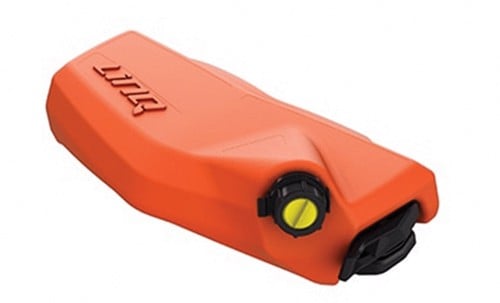
What about sleds that say right on the fuel cap “premium fuel”? Does it say “required” or “recommended”? There is a difference. Most every sled that says “recommended” will be perfectly fine on 89 octane, but they’re just a little closer to the “edge”. We’ll even run 87 through them, as long as it isn’t a full tank of it at once. With these sleds, be weary of high-load conditions like wet heavy snow or long high speed runs. Give it a splash of 89 to make sure your 87 is good enough, as some gas might not be 87 like the pump says, and then your safety margin is all used up.
During the 2007-2008 riding season, we ran 89 octane fuel pretty much all year long in all of our sleds. With the Ski-Doo 800R PowerTEK, we would run 89 and 87, trying to keep the fuel in the tank always at something higher than 87 octane fuel. Same thing with our 600 H.O. E-TEC, it said “premium fuel recommended” on the fuel cap but we ran 87 and 89 for thousands of miles. We never had a problem all year long with any of our sleds. Personally, we run 89 with confidence and would alternate between 87 and 89, just to make sure what we had in the tank was always higher than 87.
Again, if you have a higher compression head, or an aftermarket pipe, then you should consult with your speed shop or go-fast parts supplier to find out what they have learned what works best in their set-ups and what they suggest. Mountain riders who traverse large elevation changes and bump up the compression levels to compensate for the higher elevations are at higher risk, especially when they come down the mountain.
January 23, 2009
Riding a snowmobile, though an exhilarating experience, can be a very dangerous sport. Riding a street bike could even be worse, because not everyone wears a helmet, and they crash on pavement. Most fatalities caused by riding accidents are caused severe trauma to the brain and the bleeding which follows. Trauma to the brain could be reduced with the help of a scientifically designed helmet which protects the skull region from injuries, for example, when you fall off the back of a bike or sled.

Scientists at the Royal Institute of Technology (KTH) and Karolinska Institutet (KI), have developed a technology called the Multidirectional Impact Protection System (MIPS). MIPS helmets can protect a user by up to 40% better than a conventional helmet.
The helmet itself is inspired by the brain’s protecting system and a dual layer structure compensates for the rotation of the brain when an oblique impact takes place. When a rider falls and there is an impact to the head, a low friction layer in the helmet detaches and enables for the absorption of energy from the impact and protects his/her head from injury. Syntes Studio has helped the scientists design the product and it also features a ventilating system. Since it combines medical science and technology with market oriented production, it could achieve good success. Currently it is aimed at non-motorized applications like bicycles and horseback riding, but the logic is sound and could easily be applied to motorized helmets, as well.
Technology derived
from nature
The idea behind the patent was inspired by the brain’s own protection system. When the skull receives an oblique impact, the brain slides in the cerebrospinal fluid, which reduces the rotational force. This is the protective system that the engineers used as a model to develop the MIPS system. If you fall off and hit your head, a low-friction layer located between the outer and inner shells of the MIPS helmet becomes detached. This enables the outer shell to slide against the low-friction layer, absorbing the energy from jolts and impacts and protecting your head from injury as far as possible.
The combination of hi-tech and medical know-how in combination with commercially viable design makes this helmet a unique Swedish product. The ambition is to spread this paradigm shifting patent throughout the whole helmet industry. The “MIPS inside” indicating system will be seen on several other kinds of helmets in the near future.
January 22, 2009
If you ride a snowmobile out into the backcountry, or if you venture out into the woods, how will people know where to start looking for you if you don’t come back?
The National Association of Search and Rescue estimates there are over 50,000 search and rescue missions launched each year in the United States alone. Most of these are initiated without knowledge of the victims’ location.
Many snowmobilers assume they will be able to use their cell phone to alert somebody of a stuck sled, a mechanical problem, or simply being lost, as they can relay their GPS coordinates (if they carry a GPS). But often times, a cell phone doesn’t get a signal or you’re not sure where you might be.
That’s why it makes so much sense for every group to riders to have at least one of the new satellite locator devices with them. One such device is the low-cost SPOT Satellite Messenger. It gives outdoor enthusiasts users a way to alert responders of their GPS location independently of cellular coverage.
SPOT enables users to send their location and message to friends, family, or emergency responders, and to visually track the location of the SPOT satellite messenger through four simple functions:
* Alert 9-1-1 notifies the emergency response center of your GPS location
* Ask for Help sends a request for help to friends and family
* Check In lets contacts know where you are and that you are OK
* Track Progress sends and saves your location and allows contacts to track your progress using Google Maps (for an extra $49.99 per year).
Weighing just over 7 ounces with a MSRP of $169.95 (U.S.), the SPOT Satellite Messenger requires a service plan as well. For $99.99 a year you get the Alert 911, Ask For Help and Check In functions, all with unlimited usage. You can let your family know several times per day that all is well, and where you are, or if you need help.
Perhaps the best option is the “GEOS Search & Rescue Benefit” that only costs an extra $7.95/ per year if purchased at the same time as the initial activation (it’ll run you $150.00/yr USD if purchased after initial activation). This provides up to $100,000 of additional search and rescue resources, including helicopter extraction around the world and reimbursement benefits – underwritten by Lloyd’s of London – for any emergency service expenses incurred.
Bottom line – $170 for the unit, and $108 per year for satellite communication with search and rescue AND your desired contacts. To learn more visit www.findmespot.com
January 2, 2009
For a number of years we have resorted to using rubber tie down straps to help keep gear bags, gas cans and saddlebags well secured to our sleds. Sometimes it is the only tie-down method used, or was for a number of years. Then, as sleds became more sophisticated, they came with special hold-down systems and straps. But even these factory systems can fail, as we learned with some of the new XP accessories from Ski-Doo. We found our gas can laying along the side of the trail after the rivets that hold the brackets to the top of the tunnel pulled through (yes they were the OEM rivets). What to do? In that case, we got the gear home using a piece of rope that one of our guys had, along with using some safety wire to re-attach the straps to the anchors on the tunnel, minus the metal brackets they used to latch to.
Back at home, we grabbed a couple of our trusty rubber bungee cords and used our good old “X” pattern across the top of the gas can and rode it like that for well over 1,000 miles.
Anytime you want to secure gear bags or whatever kind of gear to your sled, the use of straps in an X has proven to be one of the most effective and staying methods we have found. For extra protection, twist the two straps together right at the “X” so if one strap does come loose, it will stay attached to the other one. It also helps to attach the hooks down on the running boards with the open end facing to the rear, so you don’t knock it off when riding (which is more likely if the open end of the hook is facing forward.) We’ve even taken a pliers and tightened the open end of the hook once attached if we’re at all worried about the security of the hook.
This all started back when we would walk to most any sled and drop on a set of saddlebags. Two straps and two minutes later we were ready to ride for days on end. We would line the inside of the saddlebags with a plastic bag, garbage sack, anything to give us an extra layer of water protection. It is amazing how many clothes and gear you can carry in a set of saddlebags! Normal people would actually mount bags to their sled, where we’re riding a different sled most every day or week, so we would always be looking for the temporary set-up instead of the year-long mount.
Sometimes we would have to drill four holes into the running board or into the rolled end of the running boards to mount the hooks into. Be careful if you should need to drill these holes, as one time we did that and this green liquid started to come up and out of the running board…….oops!
January 2, 2009
It’s a fact – metal brake handles are colder than plastic ones. Ask anyone who rides various brands of sleds, and they’ll all tell you that a sled with a metal brake handle will suck the heat out of your left hand far quicker than a plastic one. Think of it like a “heat sink” in reverse, the metal draws the heat out of and away from your glove and hand, dissipating it.
One solution we’ve seen some riders use is to rubber-dip their aluminum brake handles, giving it a coating that insulates the metal from your hand. Riders who keep a finger or two on the brake lever most or all of the time will notice this far more often and to a greater degree.
Why do some OEMs use a metal brake lever instead of a plastic one? It could be due to the greater control over the exact size and dimensions of the lever; it could be due to aesthetics (appearance); it could be due to uniformity and strength. Other than the heat-robbing nature, it is the superior method for the application.
January 2, 2009
With the price of a barrel of oil up about 35% since March, it stands to reason that the prices we will be paying for two-stroke injection oil and four-stroke lubricating oil will be increasing for the coming snow season as well.
Word is prices are expected to only go up about 10%, so far. This will really depend on each of the vendors and manufacturers, as much of the stock to be sold this winter was already ordered earlier in the year. The fact of the matter is we are going to see higher prices for our lubricating oils as well as for the gasoline. This may tempt some of us to use a lesser quality oil, or at least find the best value on the market. Traditional “value oils” like the Phillips Injex line of injection oils will likely see an increase in demand, due to their price vs. performance relationship. Of the OEM two-stroke injection oils, typically the Yamaha branded product has been the less expensive quality oil, in our experience, carrying a JASO-FC certification, making it a better option in terms of protection than oils simply rated at the lesser TC-W3 certification.
January 2, 2009
Polarized lenses in your sunglasses and goggles provide great benefits for your eyes while snowmobiling. Generally, people think of the need for good eye protection in the summer when the sun is higher in the sky, but as snowmobilers we all know how bright a day of riding can be out on the snow. They actually help us in both bright light and when there is a lack of contrasting light, making them ideal for the changing light conditions that snowmobilers encounter.
While simpler tinted lenses, mirrored and anti-reflective coatings have the ability to reduce glare and improve comfort, the best means of eliminating glare and increasing clarity is through a process called polarization. A polarized lens removes glare and controls the level of penetrating light, much like a Venetian blind controls sunlight through a window. Polarized light contains horizontal and vertical components, with horizontal being the most predominant and creating the most glare. A lens with a built in film of vertically oriented polarizers (blinds) is called a polarized lens which can eliminate glaring horizontal light.
Polarized lenses are well suited for snow sports where the elimination of reflected light off the snow provides significant performance advantages. Removing reflected glare allows the rider to better see dangerous obstacles, creating a safer path.
Refracted light can also be potentially dangerous and inhibit visibility, yet another reason to use a high quality polarized goggle. During early morning or early evening light, when the sun is at its most horizontal plane, its rays travel through a significant amount air particles before they reach your eye. These particles obstruct vision. A polarized lens will diminish the suns reflection on the air particles, improving one’s vision.
Polarized lenses are desirable for driving, as they reduce glare generated by the dashboard, windshield, and road surface.
So, when you go to buy your next pair of goggles or sunglasses, you will have a better understanding of what benefits a set of “polarized” lenses can do for you.
January 2, 2009
One of the trick new features on the 2009 Arctic Cat M-Series mountain sleds is the latest in Cat’s deep snow track technology – the “Power Claw”. It has a 2.25 inch lug height with a center lug profile similar to the previous “Attack 20” pattern, but with “Finger Track” fingers on the outer belts. This track has a stiffness of 80 durometer. The center-positioned “Attack 20” lugs are raked 20 degrees forward to get the sled to come up on the snow quickly without trenching.
The outer belt “fingers” are raked 20 degrees rearward to bite more positively into the snow. They are also staggered by one inch for better traction, and they’re angled so they push the snow toward the center of the track. This gives the track something to bite instead of allowing the snow to escape, which helps to provide better floatation. The lug pattern repeats every 6 pitches.
When these two features (Attack 20 interior lugs with Fingers on the exterior) are placed together on a track, it seems to give the track great deep powder as well as hard snow performance. Our test riders were most impressed with this pattern during our multiple test sessions with Arctic Cat engineers in Idaho and Colorado. There might be a compromise here, but not very much. The sleds fitted with this track get up on the powder snow quickly, yet would bite very aggressively into hard snow conditions. We really think they have something here, but would still like to ride it in even broader conditions to really know for sure.
This new track also uses Camoplast’s “Single Ply” technology to make it lighter weight and easier to turn, but it is about the same weight as the Camoplast Challenger that was on the 2008 models. Since riding this new track, every time we get on a 2007 or 2008 M-Series machine we wish they all had this new track installed.
December 20, 2007
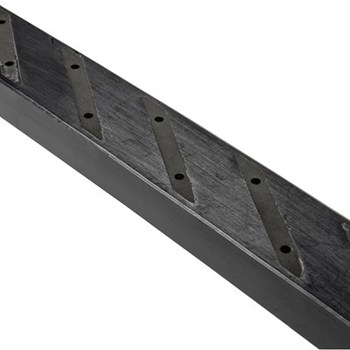
That’s right, a plastic rear suspension from AD Boivin, makers of the SnowHawk “snow bike†and the Expert X rear suspension. Called the ZX2 , the rails and swingarms are all made of a plastic composite material, said to be very robust, very durable and free of “weldingsâ€.
The swingarms and wheels (including four 8 in. (200 mm) wheels on the rear axle) are made from UHMW polyethylene (just like plastic skis), and the rails are made from a very special UHMW composite, with both plastics coming from PPD in Sherbrooke, Quebec.
AD Boivin also indicates the composite construction acts much like a plastic ski in that it has the unique ability to absorb vibrations and improve the ride experience. The composite is also permitting a certain flex on bigger bumps and turns, helping eliminate bad feedbacks to the rider.
Available in five different colors (black, yellow, red, blue and green), the ZX2 will certainly provide a unique and modern look to your sled. Depending on its length, the weight (ready to install) varies between 53 and 56 pounds, which represents a weight saving up to 20 pounds for certain models, and is said to be the lightest aftermarket snowmobile suspension available. It is also claimed to have 50% fewer parts than any other suspension on the market. While AD Boivin’s Expert suspension has 152 parts, there are only 51 parts on the ZX2. Of those 51 parts, 12 are identical bolts.
SnowTech test riders have not been given the chance to ride this latest version of the composite rear suspension, but did evaluate an early prototype several years ago. Denis Boivin came up with the idea back in 1998 and has been working on it, on and off, ever since.
Of interest is the fact this is a two-arm suspension, not a single swing arm like the Expert and Expert X suspension. Curiously, both of the shocks are located side-by-side on the rear arm, with no shock at all on the front arm! This arrangement is likely to afford a great amount of ride quality, with the front arm linked to the rear arm (coupled) to keep it from bottoming harshly. There is, however, a limiter strap on the front arm.
One unique feature is the “Revolver†quick-adjust system, which allows you to quickly and easily change the shock leverage ratio for weight transfer and ride comfort adjustments. The plate at the rear of the suspension has five holes and two pins. Two of the holes are for a weight transfer adjustment; the other three vary the moment of “coupling†between the front and rear swing arms.
Spring preload on the two rear shocks is adjusted using an included wrench in the openings on each rail to reach the preload ring (7 positions) of the springs.
The ZX2 includes two KYB shock absorbers that have a positive sensitive system called “G-Force†technology. This custom valving provides a real dual-behavior to offer comfort for the majority of the ride and an anti-bottoming zone for more security and to suit aggressive rider needs. The first 75% of the shock stroke is comfy, with the remaining 25% of the stroke reserved for anti-bottoming.
AD Boivin also indicates the ZX2 does not require lubrication (grease) like other suspensions, as the composite material has the unique ability to lubricate itself. Another slick feature is that snow won’t stick to or build-up on the composite parts, either.
Pricing for the composite ZX2 starts at $1,199 for a black 121†version, and $50 more for colored ones. The pricing goes up for the longer-track suspensions, to $1,349 for black and $1,399 for colored, all the way up to 162†mountain sleds. You also have to buy the appropriate mounting kit that fits your model, or buy the universal kit at $149. For more details go to www.adboivin.com.
December 16, 2007
It made sense to use a 4-post primary clutch for the higher-torque applications. Having four flyweights and towers would make the clutch stronger, and each flyweight could be lighter to provide the same amount of belt squeeze. So, Arctic Cat fitted their Jaguars and F-1000s with a 4-post primary last season.
Not this year. Arctic engineers have deemed they will be able to provide “improved clutch calibrations†by returning to the 3-post primary. While this will require a change in flyweight mass (each flyweight will be heavier) to make up for one less flyweight, the F-1000 also gets a 46/40 helix in the secondary for improved acceleration and performance.
Newer Posts »