Arctic Cat’s 2026 lineup brings back more than a logo and nostalgia. It brings choices. Two new mountain sleds — the HCR (Hill Climb Racer) and the HCX (Hard Core Extreme) — reintroduce a braced, twin-rail rear suspension to the Cat family at a time when the brand’s single-rail ALPHA One architecture had been the defining deep-snow feature for years. That decision matters, and not because rail count is a headline grabber; it matters because it gives riders two distinct toolsets to choose from, each better matched to different styles of mountain riding.
Arctic Cat’s official specs are straightforward and unapologetic. Both new models center the potent 858 C-TEC2 powerplant in the Catalyst-based platform, but they are tuned and packaged differently. The HCR is aimed squarely at hill-climb and big-air competitors with a 154-inch PowerClaw track, vertical steering post (AWS 36), coil-over Fox QS3 shocks and a twin-rail Float-Action rear skid. The HCX is the high-capacity freeride machine — 146-inch track, lay-down steering post, Fox FLOAT QS3 shocks and a braced twin-rail Float-Action rear suspension — built to soak up landings and hold a line through blown out or – more importantly – variable snow. These aren’t cosmetic swaps; they’re purpose-built packages.
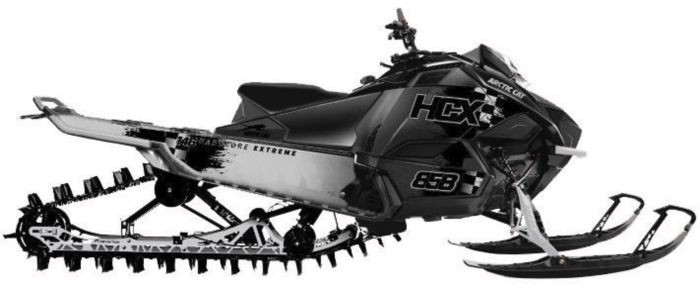
2026 Arctic Cat HCX
Why Twin Rails Again?
The single-beam ALPHA One design that Arctic Cat popularized was revolutionary: it places a single extruded aluminum rail down the center of the track, reduces weight and snow buildup, and gives a nimble, surfy feel in soft snow. Arctic Cat still emphasizes those advantages on ALPHA sleds: lighter sled, easier flotation and extremely dynamic carve-and-sidehill performance where quick, close-quarters maneuverability is prized.
Watch the Riders Rule Video Here:

Twin-rail systems, by contrast, trade a bit of that “float-light” agility for other strengths: more lateral stiffness under load, a broader contact footprint for track support, improved anti-yaw behavior when landing or punching through chop, and greater ability to brace the rails for heavy-duty applications such as hill-climb launches and hard landings. When you add bracing and quality shocks — Fox QS3 or Float QS3 in these packages — the twin-rail Float-Action setup becomes highly predictable and forgiving at the extremes. That predictability is exactly why contest riders, big-air specialists, and aggressive backcountry riders often prefer twin rails. The HCR and HCX bring those characteristics back to Cat buyers who had been asking for them.
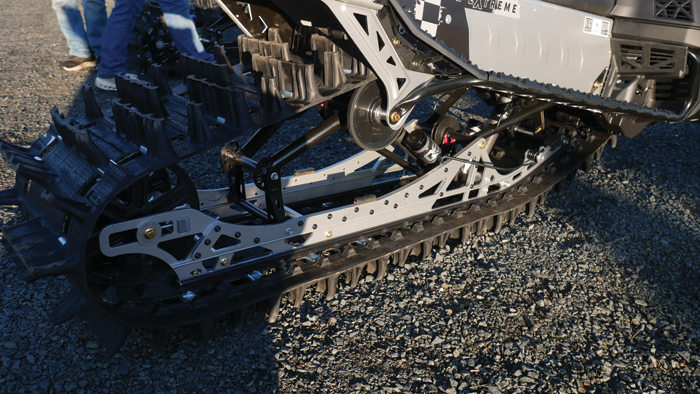
2026 Arctic Cat HCX Twin Rail Suspension
How Riding the HCR and HCX Differ from Alpha Machines
On a long ridge day where you’re punching through variable snow, threading tight north-facing gullies, or hitting steep climbs where your track must bite consistently, the twin-rail’s extra rail support shows its worth. You get less squirm under throttle, more repeatable ski pressure when you transition from bank to bank, and better control exiting chops and landings. Those are not subjective adjectives — they’re the operating envelope for riders who demand repeatable results in borderline conditions. The HCR’s 154-inch track and vertical post further bias that sled to vertical launches and keeping traction in long, steep pitches.
On the flip side, if your day is tight woods, technical single track or you value the light, surfy sensation on untracked powder, ALPHA One still hangs in there as a superior choice. It sheds snow and reduces mass outboard of the track centerline, so short-radius maneuvers and quick sidehill adjustments feel more natural. The ALPHA sled’s strength is an active, playful feel that rewards subtle rider inputs — which is why Cat didn’t abandon it and why introducing twin rails is more about adding options than replacing a philosophy.
Rider Acceptance – Why These Will Sell
There are three practical reasons riders will embrace these models. First, they asked for them. When Arctic Cat re-entered the market with ALPHA as a headline, a loud contingent of mountain riders said “great” — but also made it clear they wanted beefier, rail-braced platforms for specific uses. Bringing twin rails back is a direct response to those requests; it’s product development by listening. Industry coverage and dealer chatter around the launch made that sentiment plain: riders want choice, not one-size-fits-all.
Second, the specification packages are credible. Fox QS3 and FLOAT QS3 shocks, braced rails, race-ready steering posts and C-TEC2 power are not filler. They’re components riders recognize and trust. Third, the HCR/HCX packaging narrows the gap between factory sled and race sled for customers who don’t want to build a sled from the chassis up. For many, buying an HCR is buying a ready-to-compete platform out of the crate. Dealers are pricing these competitively against comparable offerings, which will help adoption among committed mountain riders.
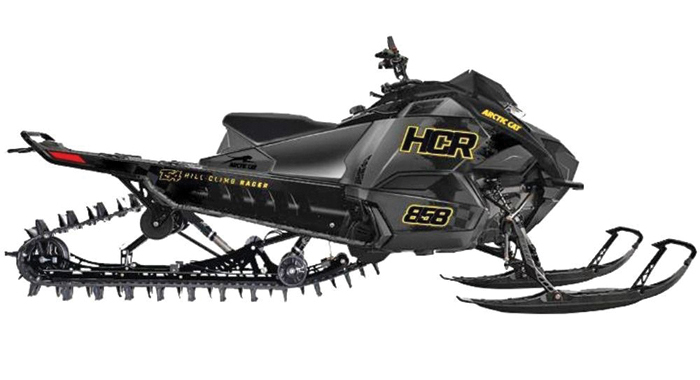
2026 Arctic Cat HCR
Applications Where Twin Rails Clearly Win
Hill-climb competition and big-air freeride are obvious winners. The HCR’s vertical post and 154-inch track are tailored for maximizing track bite in extended vertical pitches and for carrying momentum up a steep face without the sled “rolling” laterally or unloading. For avalanche mitigation runs where sleds need to deliver gear and anchor points on variable terrain, the predictability and load capacity of twin rails give operators an edge. For guide outfits that run repeated carries and need consistent handling with heavy loads, twin rails offer more structural peace of mind. The HCX straddles a middle ground — big enough to handle aggressive freeride lines while staying compact enough for complex approaches.
Tuning and setup considerations
Riders moving from ALPHA to a twin-rail Float-Action should expect and tune for a few differences. Twin rails like more rear preload in heavy snow to prevent excess squat on acceleration; shock valving can be softened slightly to regain some of the ALPHA plushness lost to the stiffer rail structure. Ski pressure tuning becomes a more standard exercise: longer steering arms and different trail geometry on these models mean you may prefer lighter bar inputs but a slightly higher static ski stance to get the preferred bite. The twin rails will keep the track more evenly loaded through climbs and landings, often improving traction predictability. Dealers experienced with mountain setups will be an excellent first stop for spring-tune advice before you take a twin-rail sled into serious terrain.
What This Says About Arctic Cat’s Direction
Reintroducing twin rails alongside ALPHA machines is a clear signal: Arctic Cat intends to be product-led and rider-responsive rather than marketing-driven. The new models are not a retreat from innovation; they’re an acknowledgment that the market is plural — different riders want different traits, and a one-geometry approach doesn’t serve everyone. Industry observers flagged the move as meaningful and immediate when Cat released the 2026 lineup, and dealers have reported strong interest and pre-orders in initial runs. It’s a statement that the revived Cat is willing to iterate fast and give customers the actual tools they ask for.
Buy the Tool That Fits the Job
There’s no universal “best” here. ALPHA One remains a brilliant engineering solution for a large set of deep-snow riders who prize flotation and nimbleness, and Arctic Cat hasn’t abandoned that vision. But the HCR and HCX are equally important: they return twin-rail capability with modern bracing, high-end dampers and purposeful ergonomics that answer the needs of hill-climb racers, big-air freeriders and payload-heavy backcountry operators. For riders who choose by application rather than brand mythology, Arctic Cat’s 2026 HCR and HCX finally deliver the right tool for those hard-use jobs — and that’s the kind of real-world engineering that wins respect on the mountain.