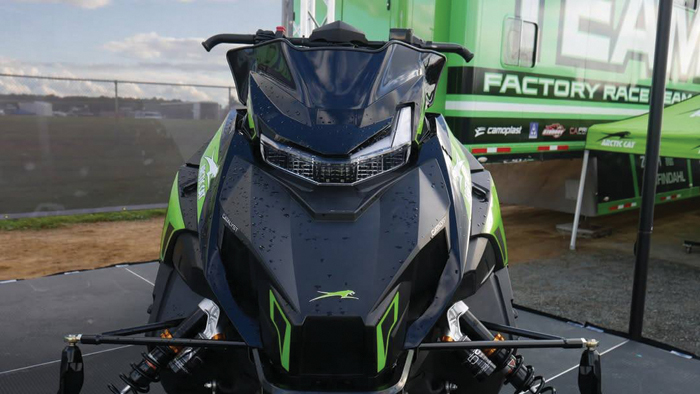
If you were at Haydays the first weekend after Labor Day, you probably noticed the big green buzz. Arctic Cat showed their 2026 lineup, and the model that stole the most second looks was the all-new ZR 600 with Electronic Power Steering (EPS). For years we’ve heard the rumor that power steering was coming to two-stroke snowmobiles, but Cat is the one who finally pulled the trigger — and in true Arctic Cat fashion, they did it on a two-stroke, something nobody else has dared to do.
They’re calling it a patented system, and for now, Arctic Cat is the only snowmobile manufacturer offering power steering. Think about that for a second: the ZR 600 and the new EXT Special 858 are the first two-stroke sleds in history with EPS. Everyone else is still talking about turbochargers and electronic shock packages, but Cat is re-writing the playbook on steering effort and cornering precision.
Yamaha first introduced Electronic Power Steering (EPS) on their four-stroke Apex models for model year 2011. It was a big headline for that year — the Apex was the world’s first production snowmobile with EPS, and Yamaha used it as a selling point for reducing steering effort and rider fatigue, especially on their heavier four-stroke sleds.
Once Arctic Cat was building Yamaha’s sleds they developed a new EPS system for the Sidewinder and Thundercat models. This time around it was an Arctic Cat designed and developed system, not what Yamaha had originally introduced. But for several years it was only found on four-stroke sleds – never a two-stroke – until now.
Watch the Riders Rule Video Here:

How it Works
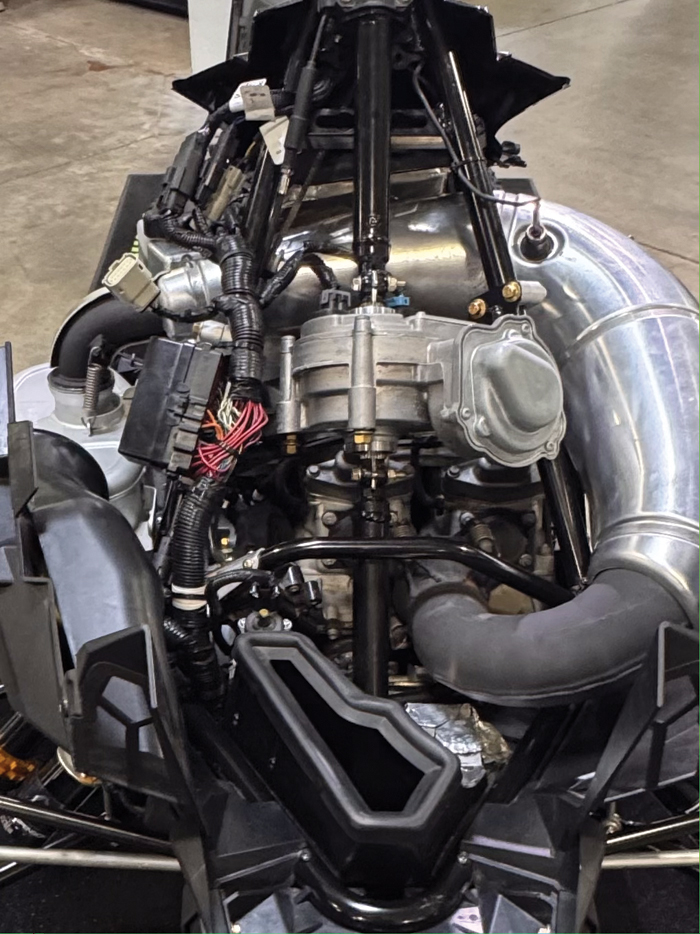
The system is electronically controlled, with sensors measuring steering input and load at the skis. The assist is variable — meaning at low speeds and in heavy snow, you get more boost to lighten the bars, while at higher speeds the assist tapers back so the sled still communicates feedback to the rider. This is not a numb, video-game type of feel; it’s engineered to keep the sled tracking with precision while dramatically reducing the force needed at the handlebars.
Veteran riders will appreciate that EPS doesn’t just make the sled “easier” to steer, it actually makes it more consistent through a range of conditions. Side-load from carbide bite, rutted-out corners, or when you’re running with a studded track — all the things that can fatigue your arms and shoulders after 100+ miles of ditch banging — are tamed by the assist.
Why it Matters
We’ve been riding long enough to know: steering effort is one of the biggest contributors to rider fatigue. When your arms, shoulders, and back are constantly fighting the bars, your reaction time slows, your lines get sloppy, and your day ends earlier than you’d like. EPS is going to extend rides, plain and simple. It also makes aggressive sleds like the ZR 600 and the new EXT Special 858 with EPS more approachable to a wider range of riders without neutering the high-performance DNA.
Another overlooked benefit is precision. When steering is lighter and more controlled, you can pick your line in a corner and stick to it without over-muscling the sled. For racing and performance trail riding, that consistency is gold. Think of how automotive EPS has evolved — better steering feel, faster inputs, less fatigue. That’s the trajectory Arctic Cat is setting here.
The other benefit, and perhaps a larger one for many riders, is the ability to use more aggressive skis and carbide runners without creating excessively high steering effort. In this sense, the sled will hold your intended lines far more accurately with exceptional cornering precision. Yes, the EPS system adds complexity, cost and weight, but the benefits to an aging demographic are undeniable. They’re just made an incredibly well-cornering sled even more precise – and unique. This is one feature that you can ONLY get from Arctic Cat.
The Big Picture
For Cat to be the only brand with EPS, and to offer it on their bread-and-butter high-performance two-stroke sleds, tells us something about where their head is at under new ownership. They’re not afraid to innovate in ways that directly change the riding experience. Power steering may not be flashy in a spec sheet, but anyone who’s fought through 150 miles of big bump trails knows what a game-changer it can be. Everyone who owned a Yamaha Apex before, and after, the addition of EPS knows full well the difference it made for that model.
EPS on the ZR 600 is not a gimmick. It’s a functional advancement that will make these sleds rail around the corners differently than anything else on the snow this winter. Just like when Cat gave us the first slide rail rear suspension, the game-changing Wilwood hydraulic brakes or introduced lightweight race sleds that forced everyone else to react, EPS is a move that raises the bar.
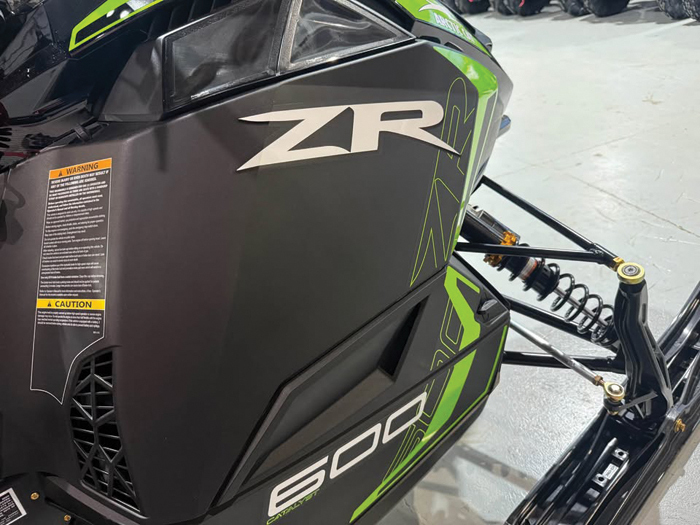
So when you see that ZR 600 EPS (or EXT Special 858 with EPS) parked on the trailer, understand what you’re looking at: the first two-stroke snowmobiles in history with electronic power steering. That’s not just a Haydays headline, that’s an industry milestone.
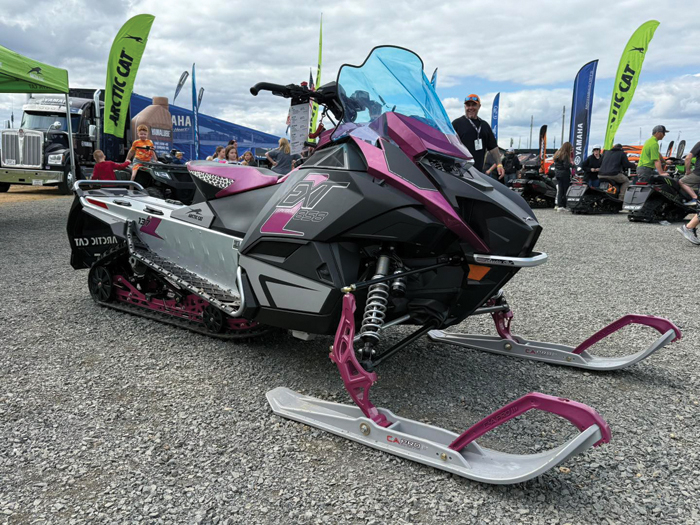
EXT Special 858 with EPS
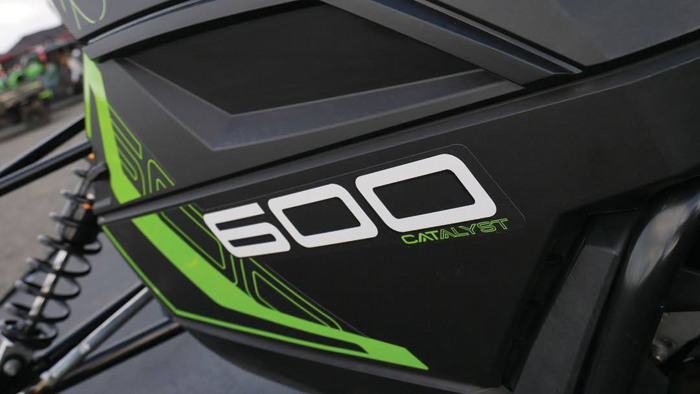
The 2026 ZR 600 EPS will be offered in two configurations; there will be a ZR 600 EPS 129 with a 1.25” lug height RipSaw I track sporting an uncoupled version of the Slide-Action rear suspension with an MSRP of $15,689.
The other is a ZR 600 EPS 137 with a 1.25” lug height RipSaw II track and the coupled Slide-Action priced at $15,899 MSRP. These prices are $800 more than the non-EPS-equipped ZR 600 Sno Pro models but less than the ZR 600 ATAC models.